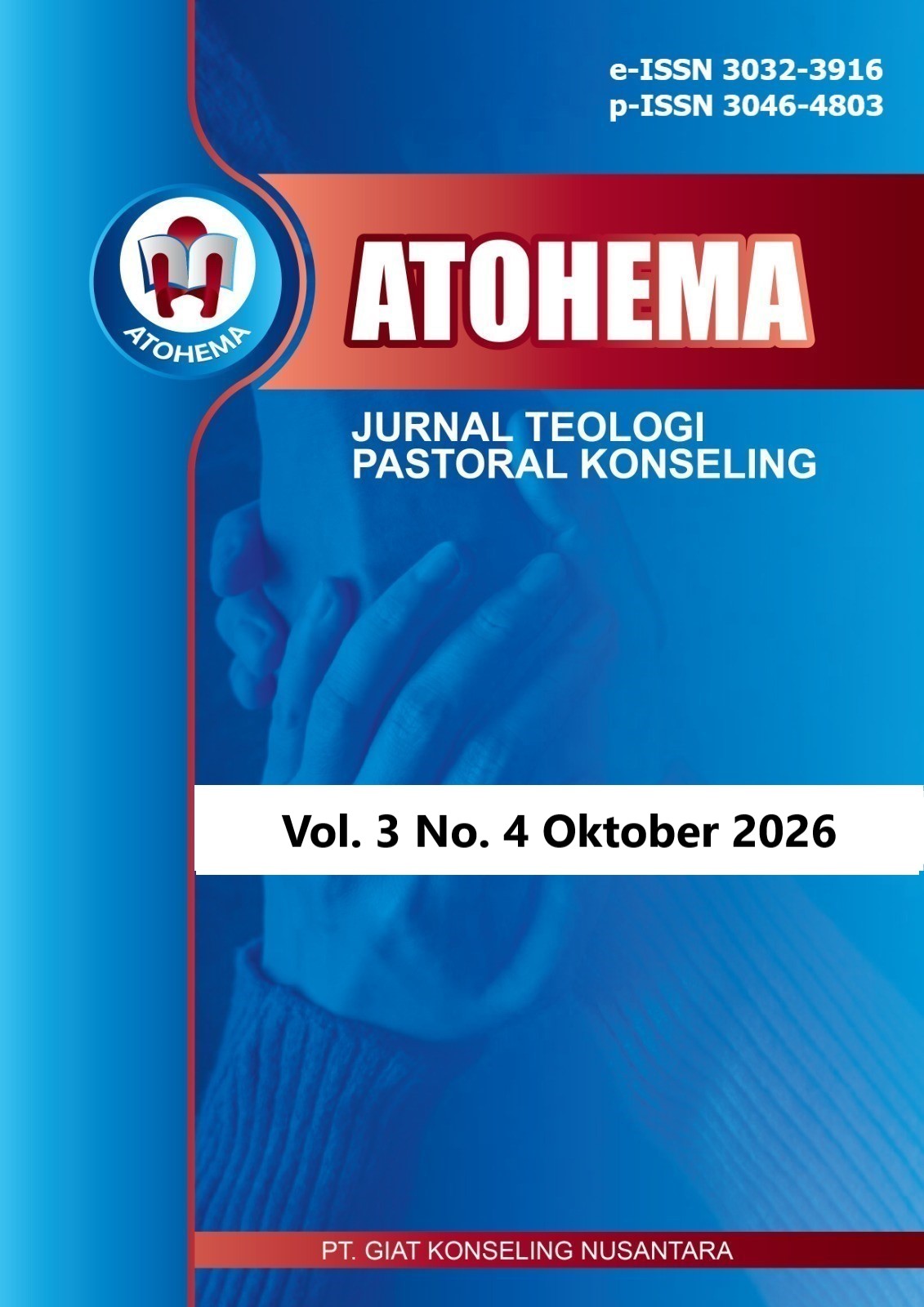
PERSFEKTIF KERJA YANG ALKITABIAH MENCEGAH BURNOUT
DOI:
https://doi.org/10.70420/atohema.v3i4.303Keywords:
Burnout, Theology of Work, Theology of Vocation, Sabbath Theology, Biblical PerspectiveAbstract
Burnout has become a structural workplace phenomenon that is not limited to secular professions but also affects those in ecclesial ministry, raising the question of whether its root causes are purely psychological and managerial or also theological in nature. This study aims to formulate a biblical perspective on work as a preventive framework against burnout by examining worker burnout characteristics through psychological theory, exploring the biblical understanding of work as creation mandate and calling, and synthesizing both into an applicable theological proposition. The theoretical foundation rests on Maslach's three-dimensional burnout theory (emotional exhaustion, depersonalization, and reduced personal accomplishment), integrated with creation theology and Sabbath theology. This research employs a qualitative library research method combined with theological-hermeneutical interpretation of relevant biblical texts, using historical-grammatical exegesis and thematic-comparative analysis of secondary sources. The findings reveal that burnout is triggered not merely by quantitative workload but also by qualitative factors such as insufficient recognition and unhealthy work rhythms, while the historical reduction of vocation from a sacred calling into mere productivity ethics culminating in hustle culture has stripped work of its transcendent meaning. The study concludes that a biblical perspective on work, integrating creation theology and rest theology, functions preventively rather than merely curatively against burnout: creation theology restores transcendent meaning that guards against emotional exhaustion and depersonalization, while Sabbath theology restores an alternative standard of accomplishment that guards against reduced personal accomplishment, affirming rest as a legitimate expression of faithfulness to one's calling.
References
Abatan, Yofince. “Pandangan Paulus Tentang Bekerja Yang Professionaldalam 2 Tes 3: 10 Dan Aplikasinya Bagi Orang Kristen Masa Kini.” Kariwari: Journal of Catholic and Pastoral Education vol. 2, no. 1 (2025). https://doi.org/10.61589/dw790b14.
Aftha, Aghnia Ulya, Muhammad Khidri Alwi, Fatmah Afrianty Gobel, Yusriani Wardiah Hamzah, and Abdul Gafur. “Hubungan Kelelahan Emosional, Depersonalisasi Dan Pencapaian Personal Dengan Kinerja Perawat Di RSKDIA Pertiwi Makassar.” Journal of Aafiyah Health Research (JAHR) vol. 6, no. 1 (2025).
Ares, Astrid Gabriela, and Paulus Dimas Prabowo. “Ketenangan Jiwa Di Tengah Budaya Gila Kerja ‘Hustle Culture’: Refleksi Mazmur 131:1-3.” Pistis: Jurnal Teologi Dan Praktika vol. 25, no. 1 (2025). https://doi.org/10.51591/pst.v25i1.165.
Atmaja, I Gede Indra Wira, and I Wayan Suana. “PENGARUH BEBAN KERJA TERHADAP BURNOUT DENGAN ROLE STRESS SEBAGAI VARIABEL MEDIASI PADA KARYAWAN RUMOURS RESTAURANT.” E-Jurnal Manajemen vol. 8, no. 2 (2019).
Azizi, Carissa Dar, and Endang Dwiyanti. “Faktor Penyebab Burnout Syndrome Pada Pekerja Kantor: Literature Review.” Klinik: Jurnal Ilmiah Kedokteran Dan Kesehatan vol. 5, no. 2 (2026).
Budhi, Samgar Setia. “Makna Teologi Istirahat Dan Perkembanganya Dalam Kitab-Kitab Kanonik.” Predica Verbum: Jurnal Teologi Dan Misi vol. 1, no. 2 (2021). https://doi.org/10.51591/predicaverbum.v1i2.27.
Chandra, Felix. “Pengaruh Beban Kerja Dan Stres Kerja Terhadap Burnout.” JURNAL MANEKSI vol. 13, no. 1 (2024).
Jefri Andri Saputra. “TEOLOGI ISTIRAHAT DAN HUSTLE CULTURE : Teologi Istirahat Dalam Keluaran 23:12 Dan Implikasinya Terhadap Fenomena Hustle Culture.” TRACK: Jurnal Kepemimpinan Kristen, Teologi, Dan Entrepreneurship vol. 03, no. 02 (2024).
Jeikawati, Dian Purnama Sari, Suprihatini, and Faradila. “Description Of Burnout Syndrome In Health Workers In Palangka Raya City Hospital.” Borneo Journal of Medical Laboratory Technology vol. 5, no. 2 (2023).
Kaseke, Fanny Y. M. “Sabat Dan Pandemic Covid 19 Perspektif Eco-Teologi Kristen.” SCRIPTA: Jurnal Teologi Dan Pelayanan vol. 9, no. 1 (2020). https://doi.org/10.47154/scripta.v9i1.110.
Kim, Lioe Mie, Hikman Sirait, and Esti Rahayu. “Sabat Sebagai Penyembuhan: Pendekatan Teologis Terhadap Konsep Self-Care Dalam Kejadian 2: 2–3.” Immanuel: Jurnal Teologi Dan Pendidikan Kristen vol. 6, no. 2 (2025).
Larasati, Veny, Bintang Arroyantri P, Ziske Maritska, Nita Parisa, and Diyaz Syauki Ikhsan. “Edukasi Pencegahan Sindrom Kelelahan (Burnout) Pada Karyawan Pertamina MOR II Palembang.” Jurnal Pengabdian Masyarakat: Humanity and Medicine vol. 1, no. 3 (2020). https://doi.org/10.32539/hummed.v1i3.13.
Lima, Jadi S. “TENTANG KERJA DAN PANGGILAN.” VERBUM CHRISTI vol. 4, no. 1 (2017).
Luwluw, Atqakum, Asniar Khumas, and Haerani Nur. “PENGARUH BURNOUT DAN WORK-LIFE BALANCE TERHADAP QUIET QUITTING PADA PEKERJA GENERASI Z.” Jurnal Ilmiah Multidisipliner (JIM) vol. 9, no. 12 (2025).
Maden, Kinurung M., Ruth Scäfer, and Keloso S. Ugak. “CALVINISME.” Jurnal Teologi Pambelum vol. 1, no. 02 (2009).
Mailina, and Wahyu Wijati. “Burnout Dan Persekutuan Dalam Membangun Kualitas Pelayanan Tim Ibadah.” Damai: Jurnal Pendidikan Agama Kristen Dan Filsafat vol. 3, no. Agustus (2026).
Manunay, Verliany Riasty Vindy. “Dunia Ekonomi Sebagai Mimbar Memuliakan Allah Diskursus Teologi Jhon Calvin.” Arumbae: Jurnal Ilmiah Teologi Dan Studi Agama vol. 4 (2022).
Metris, Diksi. “Hustle Culture: Mencermati Tren Perilaku Yang Mendorong Kesuksesan Tanpa Henti.” Al-KALAM : JURNAL KOMUNIKASI, BISNIS DAN MANAJEMEN vol. 11, no. 1 (2024). https://doi.org/10.31602/al-kalam.v11i1.12053.
Nainupu, Astrid Maryam Yvonny. “Melayani Tanpa Burnout: Spiritualitas Dan Kesehatan Mental Pelayan Tuhan.” Proceeding National Conference of Christian Education and Theology vol. 3, no. 2 (2025). https://doi.org/10.46445/nccet.v3i2.1151.
Pardosi, Milton. “Allah ‘Berhenti’ (Šabāt Dan Nûah) Pada Hari Sabat: Aplikasi Bagi Para Pemelihara Sabat.” Jurnal Koinonia vol. 13, no. 2 (2021). https://doi.org/10.35974/koinonia.v13i2.2647.
Putri, Rindu Annisa, and Nidya Dudija. “Burnout among Generation Z Employees: A Literature Review.” IRJEMS International Research Journal of Economics and Management Studies vol. 3, no. 6 (2024). https://doi.org/10.56472/25835238/irjems-v3i6p138.
Rizka, Zasyatin. “SIKAP TERHADAP PENGEMBANGAN KARIR DENGAN BURNOUT PADA KARYAWAN.” Journal Ilmiah Psikologi Terapan vol. 1, no. 2 (2013). http://dx.doi.org/10.1016/j.jsames.2011.03.003%0Ahttps://doi.org/10.1016/j.gr.2017.08.001%0Ahttp://dx.doi.org/10.1016/j.precamres.2014.12.018%0Ahttp://dx.doi.org/10.1016/j.precamres.2011.08.005%0Ahttp://dx.doi.org/10.1080/00206814.2014.902757%0Ahttp://dx.
Sari, Eiodia Eveline Permata, and Theo Pilus Candra. “Analisis Pastoral Terhadap Fenomena Burnout Pada Hamba Tuhan Dan Rekonstruksi Strategi Self-Care Berbasis Teologi Istirahat.” Journal of Digital Innovation and Social Research vol. 3, no. 1 (2024). https://doi.org/10.5281/zenodo.21730441.
Shaikh, Altaf A, Anam Shaikh, Dr Rajesh, and Amber Tahir. “Assessment of Burnout and Its Factors Among Doctors Using the Abbreviated Maslach Burnout Inventory.” Cureus vol. 11, no. 2 (2019). https://doi.org/10.7759/cureus.4101.
Sugianto, Erwin Sudarmono Simanjuntak, Vicky B.G.D. Paat, and Paulus Sugianto. “Bekerja Dalam Perspektif Alkitab Dan Relevansinya Terhadap Pelayanan.” Davar: Jurnal Teologi vol. 4, no. 2 (2023).
Tobi, Ongki Riando, Sabda Budiman, Stuard Guild, Filmon Gusti Tansi, and Jamin Tanhidy. “Sabat Dalam Perjanjian Lama Dan Perjanjian Baru Dan Implikasi Bagi Orang Percaya Masa Kini.” REI MAI: Jurnal Ilmu Teologi Dan Pendidikan Kristen vol. 2, no. 2 (2024). https://doi.org/10.69748/jrm.v2i2.184.
Widhianingtanti, Lucia Trisni, and Gilles van Luijtelaar. “The Maslach-Trisni Burnout Inventory: Adaptation for Indonesia.” Jurnal Pengukuran Psikologi Dan Pendidikan Indonesia vol. 11, no. 1 (2022). https://doi.org/10.15408/jp3i.v11i1.24400.
Winarjo, Hendra. “John Calvin Tentang Kerja Dan Relevansinya Dengan Pekerja Kristen Kontemporer Di Indonesia.” Societas Dei: Jurnal Agama Dan Masyarakat vol. 10, no. 1 (2023). https://doi.org/10.33550/sd.v10i1.374.
Downloads
Published
Issue
Section
License
Copyright (c) 2026 Authors

This work is licensed under a Creative Commons Attribution 4.0 International License.